
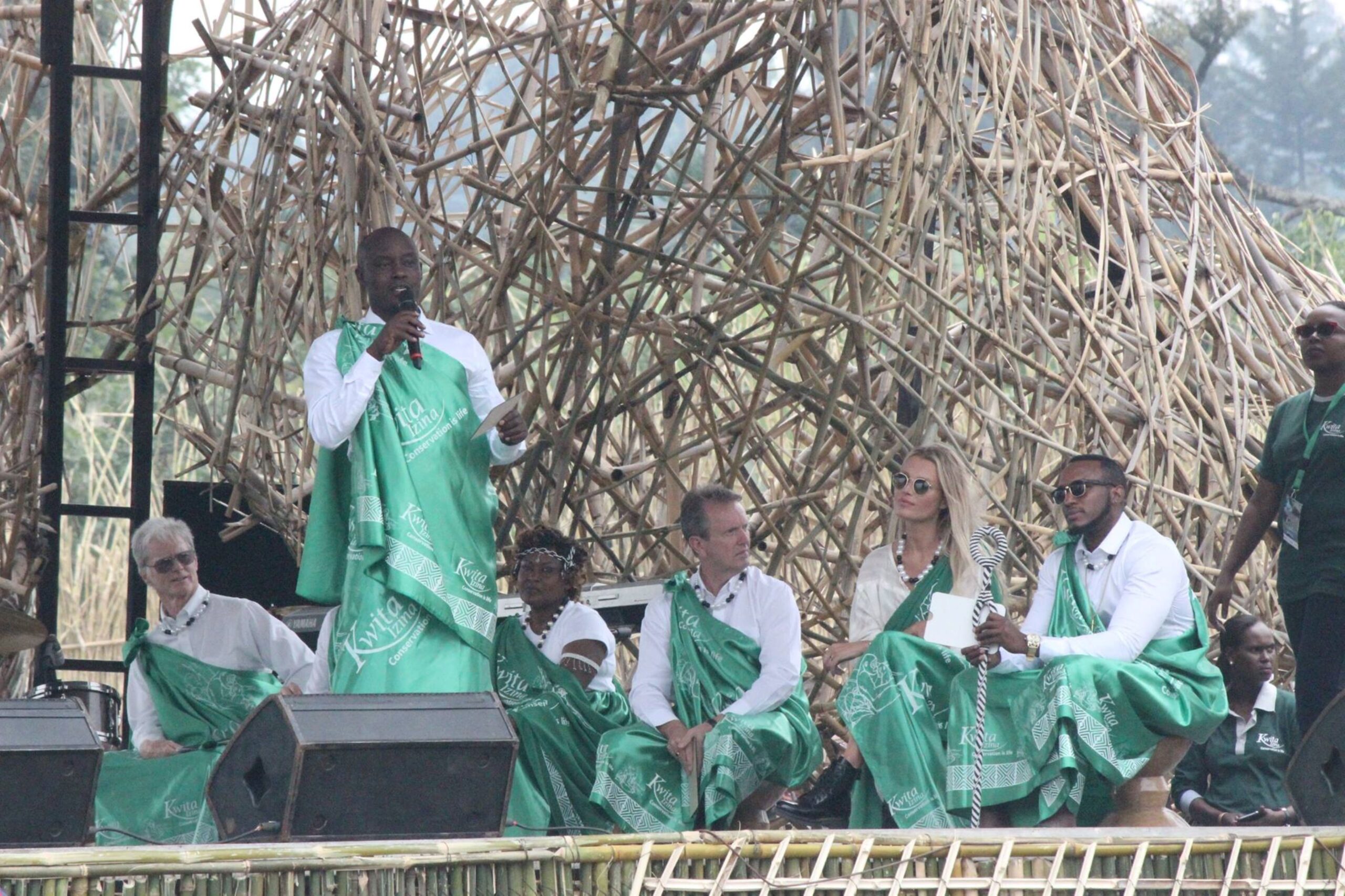
Each year at the foothills of the Virunga Massif, Rwanda hosts Kwita Izina, the annual gorilla naming ceremony that blends culture, conservation, tourism, and community development. Launched in 2005 by the Rwanda Development Board, it draws inspiration from a centuries‑old Rwandan tradition in which families name their children eight days after birth. By extending this ritual to newborn mountain gorillas in Volcanoes National Park, Rwanda elevated the animals from distant wildlife to symbols of national heritage and community stewardship. Since its inception, the ceremony has named nearly 400 baby mountain gorillas.
The first ceremony in 2005 was intimate, gathering conservationists, park authorities, and local leaders to celebrate new gorilla births and Rwanda’s recovery following years of instability. At the time, the mountain gorilla population was fragile, tourism was rebuilding, and community trust in conservation required careful nurturing. Over the years, Kwita Izina has grown into an internationally recognized platform, attracting global scientists, policy makers, and conservation leaders. Since 2012, the mountain gorilla population in the Virunga Massif has grown from about 880 to more than 1,060 today, reflecting decades of sustained conservation efforts. In 2023, Rwanda welcomed over 1.4 million international visitors, generating about USD 620 million in tourism revenue, with gorilla tourism contributing to conservation-linked visitor experiences.
A Personal Milestone in Conservation: 2017
In 2017, Greg Bakunzi was honored as one of the official gorilla namers — a moment that was personally meaningful while reflecting the broader conservation journey in Rwanda. His selection recognized decades of grassroots work in the Virunga region, where conservation and community livelihoods are closely intertwined. Greg has long championed the principle that conservation succeeds when communities benefit.
Based in Musanze, he helped develop a tourism model centered on local communities, in which visitors’ contributions directly support local development, cultural preservation, and environmental stewardship. His participation in Kwita Izina symbolized the role of community-based tourism as a pillar of Rwanda’s conservation strategy.
Through initiatives such as Amahoro Tours, Red Rocks Community Benefit Company, and Red Rocks Initiative for Sustainable Development, his work has supported youth employment, cultural artisans, environmental education, and reforestation programs — all while strengthening local ownership of conservation outcomes. Being part of Kwita Izina in 2017 affirmed that grassroots entrepreneurship can have a meaningful place in national and global conservation efforts.
Recent Ceremonies and Expanding Impact
Kwita Izina has increasingly emphasized resilience, climate responsibility, and inclusive growth. Post-pandemic editions highlighted tourism recovery, community solidarity, and innovation in conservation financing. In 2025, the 20th edition named 40 baby mountain gorillas under the theme “A legacy of community-centered conservation.” The ceremony brought together local community members, conservationists, tourists, government dignitaries, and visiting public figures, illustrating its ability to unite diverse stakeholders. Kwita Izina continues to strengthen Rwanda’s model of conservation-linked tourism, showing how cultural heritage, wildlife protection, and community development can advance together.


