
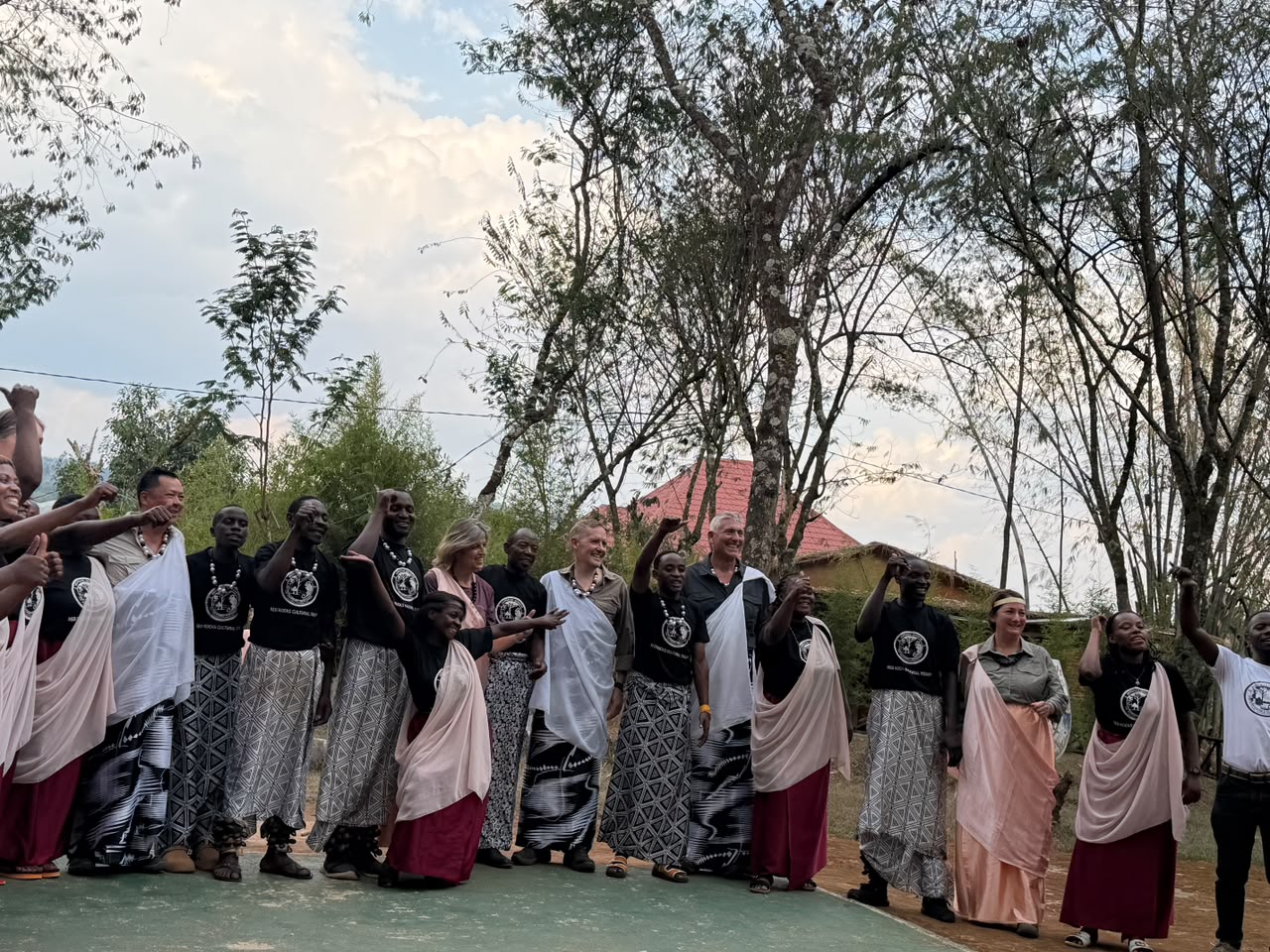
Following her participation in the 21st Kwita Izina Gorilla Naming Ceremony, where she named a baby gorilla "Ishakwe," UN Tourism Secretary-General Shaikha Al Nuwais visited the Red Rocks Intercultural Centre in Nkotsi Village on Thursday, 3 September 2026.
Nkotsi Village, recognized in 2021 as one of UN Tourism's inaugural Best Tourism Villages, sits ten minutes from Musanze town at the foot of Volcanoes National Park. Welcomed by traditional drumming and community dancers, the Secretary-General met with Red Rocks founder Greg Bakunzi to observe how community-led sustainable tourism creates lasting livelihoods alongside wildlife conservation.
"When communities next to Volcanoes National Park benefit directly from tourism, they become its strongest custodians." — Greg Bakunzi, Founder of Red Rocks Intercultural Centre.
While mountain gorilla trekking remains Rwanda's flagship experience, Red Rocks focuses on diversifying local opportunities through cultural heritage, crafts, music, and culinary experiences, ensuring tourism benefits extend beyond the park gates. Supported by the UN Tourism Small Grants Programme in partnership with the TUI Care Foundation, the project "Empowering Artists and Artisans Through Creative Tourism" reached 100 direct beneficiaries across Nkotsi and Bisate villages, of which 80% were women and 40% youth.
During an immersive exhibition tour, Secretary-General Al Nuwais participated in hands-on basket weaving alongside local artisan Paulina, explored traditional pottery and painting, visited the youth creative studio for music and video production, and tasted local culinary arts. Beyond theinitial grant funding of €20,000, co-financed with €4,500 from Red Rocks, the initiative builds long-term capacity through weekly training in design, digital storytelling, and sustainable material sourcing, as well as cross-border knowledge sharing with peer projects in Namibia, Mozambique, and Tanzania.
The visit celebrated a shared vision where cultural conservation and community empowerment reinforce one another and where tourism, when rooted in community ownership, becomes a lasting force for both.


